




Hi, I'm Lukas Ziegler, a sound practitioner offering sound baths and handpan workshops in Austria. In this blog post, I'm excited to share with you my experience with playing the handpan during sound healing journeys and the lessons I've learned so far.
The Power of the Handpan in Sound Healing
Sound healing is not a modern trend, but a practice that has been around for centuries. When we listen to gentle, repetitive sounds, the conscious mind begins to slow down, creating a clear pathway to reach the subconscious. The handpan is perfectly suited for this, thanks to its harmonic nature and rich overtone structure. When you strike one note, you aren't just hearing a single pitch, but multiple, precisely tuned overtones that create a calming soundscape. This built-in harmony helps the mind's tendency to analyze decrease, facilitating a shift into deeper, more relaxed states without conscious effort.
Integrating the Handpan into Your Sound Journeys

(Photo credits: @johannes.olszewski / @yogaoceanflow )
The handpan is incredibly versatile, but it helps to think about where to place it in your sound journey. Its effect differs from other instruments like singing bowls.
1. Starting with the Handpan
Using the handpan at the beginning of a session helps to calm the mind and invite participants into the present moment. The melodic tones are catchy and can gently slow down the perception of your audience, preparing them for deeper relaxation.
2. Ending with the Handpan
This is a great way to guide participants back from deep relaxation. You can start playing slowly, leaving plenty of space, and gradually build up harmony and rhythm. It provides a soft landing back into a more active state of mind.
3. Playing in the Middle
This requires more finesse. Your audience will likely be in a deeper state of relaxation, so playing with too much rhythm or speed can easily pull them out of it. If you use it in the middle, focus on slow, atmospheric playing.
In sound journeys, the goal is not to perform or show off your skills. Your music should open a space, serving as a map for the listener's own personal journey. The more you practice, the more emotional states you can evoke. Intention is key.
General Advice for Playing in Sound Journeys
Here are four principles that will help you create powerful and effective sound healing experiences:
1. Simplicity
In sound baths, less is more. Allow silence to be part of your playing, especially when you want to slow things down. Start and end with simple chords and use repetition. Playing with simplicity means honoring your own capacity and not overcomplicating the music.
2. Repetition
Find a balance between repetition and gentle variations. Our minds relax when they can anticipate repeating patterns, which carry us forward like a wave. Avoid abrupt changes in your playing style unless it's intentional.
3. Intention & Emotional Direction
Have a clear intention for why you are playing a specific melody or rhythm. Actively shape the journey of the group through the intention you bring into your playing. Feel the effect the sounds have on you, as these are the waves you create in your listeners.
4. Room Awareness
Be aware of your surroundings. Develop a sense for the inner state of your audience and the energy in the room. Ask yourself: How am I feeling? Is the tempo right? What do the people in the room need right now? Pay attention to indicators from your audience.

(Photo credits: @createdby_twentytwo)
432 Hz vs. 440 Hz: Does It Matter for Sound Healing?
This question comes up a lot. The short answer is: you can use handpans in both 440 Hz and 432 Hz for sound healing. The healing power lies not only in the frequency but in your intention and the way you play.
What is essential, however, is not to mix 440 Hz and 432 Hz instruments in the same continuous session. The subtle difference creates a dissonance that can distract participants from deep relaxation. If you already own a 440 Hz handpan, it is perfectly fine to use it. If you want to use both tunings, play them in separate segments of your journey with another instrument or silence in between.
Closing Words
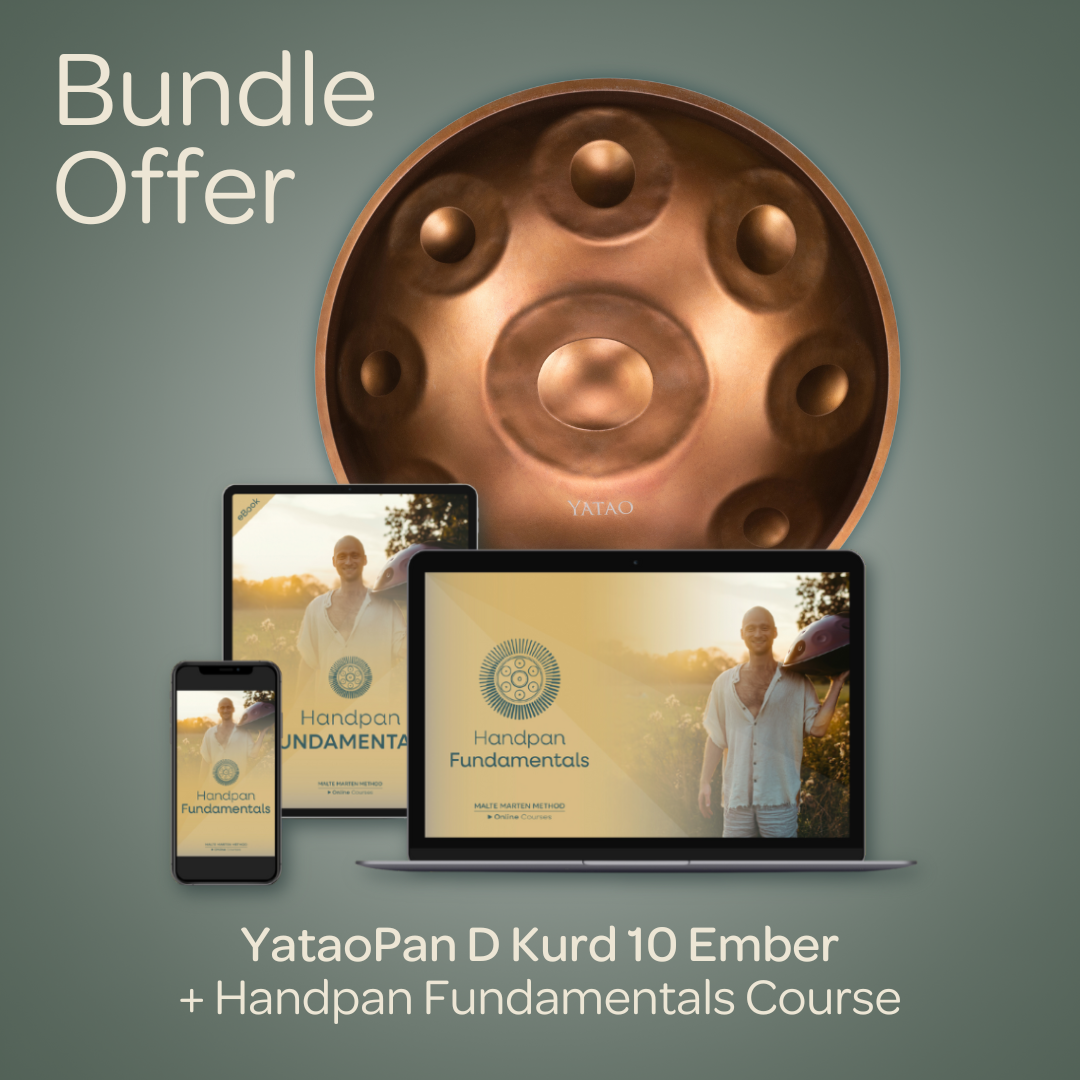
While I am a huge fan of ember steel handpans, like the YataoPan D Kurd 13 Ember, due to their warm sound and long sustain, the most important practical advice I can give is to simply start with the handpan you have or which you can afford.
And for those who are just beginning to explore the world of sound journeys, my advice is to collaborate with yoga teachers and offer to play during Shavasana, which is the final relaxation period at the end of a yoga class. This is a wonderful, low-pressure way to improve your skills and to sharpen your awareness of playing for different audiences. And if you're unsure how your playing is perceived, record yourself and listen to it afterwards with closed eyes or while resting. This offers invaluable feedback.
Ultimately, what truly matters is how the sounds you create make people feel. If you find these tips useful and want to go deeper, reach out to me or attend one of my workshops or retreats. I can also highly recommend attending a certified sound practitioner training that takes you into the depths of this art. Knowing the fundamentals of sound healing is key to building powerful and effective journeys.
About the Author
Lukas Ziegler is a sound practitioner based in Austria, offering sound baths and handpan workshops. You can find out more about him on:
Want to explore more topics? You can find all our blog articles here.
If you have any questions, feel free to reach out to us. We are happy to help you!
E-Mail: info@yataoshop.com
WhatsApp: +49 1573 6301986
Frequently Asked Questions
Do I need a special handpan for sound healing?
No, you can use any well-tuned handpan for sound healing. The most important factor is your intention and playing style. However, instruments with a long sustain and warm tone are often preferred.
Is 432 Hz better than 440 Hz for sound healing?
There is no definitive answer. Both 432 Hz and 440 Hz can be used effectively. The healing power comes from your intention and how you play, not just the frequency. The most important thing is not to mix the two tunings in the same session, as the dissonance can be distracting.
What's the best way to start practicing sound healing with a handpan?
A great way to start is by collaborating with yoga teachers and playing during the final relaxation (Shavasana). This is a low-pressure environment to practice and get feedback. Recording yourself and listening back is also an invaluable tool for improvement.
How do I avoid overwhelming participants in a sound bath?
Simplicity is key. Play slowly, leave plenty of space and silence between notes, and use repetition. Avoid complex melodies or fast rhythms, as this can pull listeners out of their relaxed state. Focus on creating a calm, consistent soundscape.
Can I combine a handpan with other instruments like singing bowls?
Yes, absolutely. Handpans work beautifully with other sound healing instruments. A common structure is to start with the handpan to calm the mind, transition to singing bowls for deep relaxation, and then bring the handpan back in to gently guide participants back to alertness.

