




If you've spent any time researching your first handpan, you've probably noticed one name coming up again and again: D Kurd. It's the scale you'll see on almost every beginner recommendation list, hear in most tutorial videos, and find on the majority of instruments sold worldwide.
That's not a coincidence. D Kurd has earned its reputation as the most approachable entry point into the handpan world, and once you understand why, choosing your first scale stops feeling like a gamble and starts feeling like an easy, confident decision.
In short: The D Kurd scale is widely considered one of the easiest handpan scales to learn and one of the most beginner-friendly, because its structure is intuitive, while it has a dynamic range to create different moods and express yourself even with simple playing patterns. For new players, D Kurd offers a balanced mix of intuitive playing, meditative sound, and enough musical depth to grow over time.
What Is the D Kurd Scale?
At its core, a handpan scale is simply the set of notes an instrument is tuned to. D Kurd is a natural minor scale centered around the note D, which is why you'll also see it labeled "D Minor" on some listings. The center note, called the "Dome," sits in the middle of the instrument, and the surrounding tone fields carry the rest of the scale.
A standard 9-note D Kurd includes D (Dome), A, Bb, C, D, E, F, G, and A, arranged in the zigzag pattern typical of handpans. Extended versions like the D Kurd 13, the layout we recommend for beginners at Yatao, build on this same core scale with additional notes for more range. What makes this combination special is that it contains all seven notes of the D minor scale, with nothing left out. Other popular minor scales, like Celtic Minor or Amara, deliberately skip a note to create a more open sound. D Kurd keeps the full set, which is exactly what gives it such a rich and complete character.
You don't need any music theory to enjoy it, though. That's really the point: D Kurd was shaped by decades of handpan players and builders to sound good almost no matter what you play.
Why Is D Kurd So Beginner-Friendly?
There are a few concrete reasons D Kurd tends to be the first scale recommended to new players.
Every note works together. Because the scale is diatonic and complete, there's no such thing as a "wrong" note on a D Kurd handpan. That said, the D Kurd layout has its own harmony axis, an invisible line running through the note arrangement that separates the scale into two "sides." Once you understand where that axis lies on your D Kurd and pay attention to it as you play, the instrument opens up into its most harmonious sound. You don't need to think in music theory to feel this; with a little time on the instrument, your hands naturally learn where that axis sits.
It's emotionally versatile. D Kurd isn't locked into one mood. The easiest way to discover its range is simply to play two or three notes at the same time, whether they sit on the same side of the harmony axis or you reach across to the other side. Notes close together on one side tend to feel warmer and more grounded, while combining notes from both sides opens up more tension and color. It's worth taking your time here and simply experimenting; every combination reveals a slightly different mood, from meditative and introspective to dramatic or energetic, and getting to know these moods is one of the most rewarding parts of learning the instrument.
The learning ecosystem is built around it. The vast majority of handpan tutorials, workshops, and structured courses, including the Malte Marten Method, are taught primarily on D Kurd. If you want structured guidance, sheet-free tutorials, or simply people to jam with, D Kurd gives you the largest community and resource base by far.
Which D Kurd Handpan Should Beginners Choose?
D Kurd is available in a few different note counts across the handpan world, ranging from a minimal 9-note layout up to extended 13-note versions. At Yatao, we've made this decision simple by curating our beginner range around a single, well-rounded model: the YataoPan D Kurd 13.
Why 13 notes, even for absolute beginners? A smaller layout can feel simple at first, but many players find themselves wanting more room within just a few months, more chord options, more melodic possibilities, more space to develop their own style. The D Kurd 13 gives you that room from day one, without sacrificing the intuitive, forgiving character that makes D Kurd so beginner-friendly in the first place. You get the full emotional range of the scale, six complete triads to explore, and enough depth to keep growing with the instrument for years rather than outgrowing it after your first few months.
In short: you don't need to start small and upgrade later. The D Kurd 13 lets you begin and grow with the same instrument.

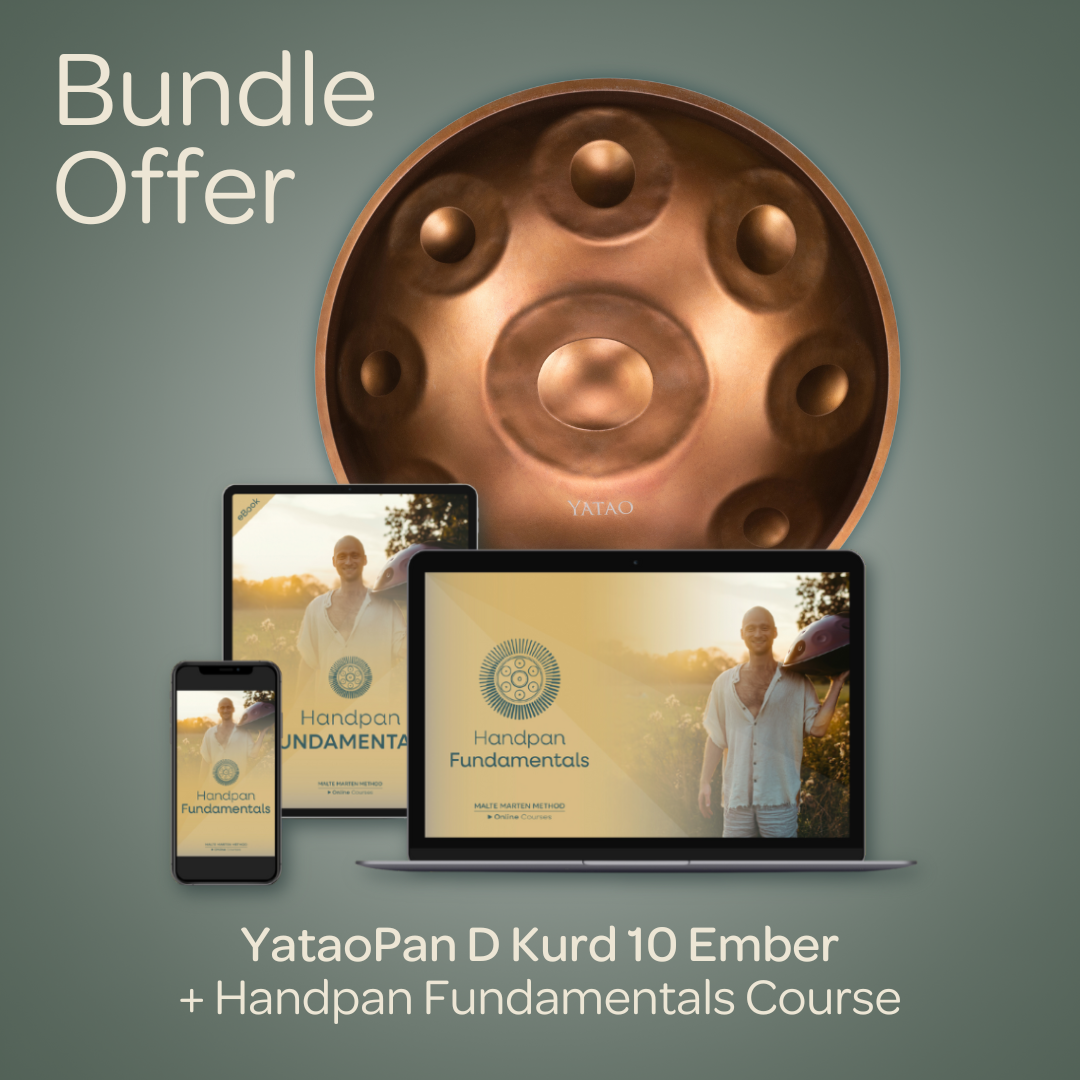
Our recommendation: If you'd like to start with a complete package, the YataoPan D Kurd 13 Bundle paired with the D Kurd Scale Course from the Malte Marten Method is one of our most popular combinations: a well-rounded instrument matched with step-by-step video lessons built specifically around the D Kurd 13 layout, so you're never guessing what to play next.
Is D Kurd Good for Meditation and Sound Healing?
Many players choose D Kurd not just to make music, but to slow down. Its natural minor tonality and long, resonant sustain make repetitive, simple patterns feel calm and grounding almost immediately, which is part of why it's a popular companion for breathwork, quiet evening practice, or simply unwinding after a long day.
To be clear, a handpan is a musical instrument, not a medical or therapeutic device, and we don't make any healing claims about it. What we can say is that the D Kurd's sound character, warm, sustained, and forgiving of simple playing, lends itself naturally to slow, mindful, meditative play. Many players describe sitting down with their D Kurd as a way to create a few minutes of stillness in their day.
Common Beginner Mistakes When Choosing a Handpan Scale
A few patterns come up again and again when new players choose the wrong instrument for themselves:
- Deciding based on one YouTube video. It's easy to fall in love with a specific player's style rather than the scale itself. Try to listen to several different players on the same scale before deciding.
- Worrying that more notes mean more complexity. A 13-note D Kurd can look intimidating at first glance, but as an absolute beginner you can simply play the top side of the instrument and enjoy the same intuitive, forgiving experience as any smaller layout. The extra notes are there waiting for you once you're ready; after some time, they open the door to new playing styles and patterns that simply aren't possible on a layout limited to the top side alone.
- Overestimating the importance of 432 Hz vs 440 Hz. Both tunings sound wonderful, and the difference is subtle. Don't let this decision hold up your purchase; focus on the scale and note count first.
- Not asking for guidance. Every handpan purchase is a bit of an emotional decision, and it's completely normal to feel unsure. Reaching out to people who work with these instruments every day can save you from a choice you might regret later.
FAQ
Is D Kurd the best handpan scale for beginners?
For most new players, yes. Its complete natural minor scale, wide emotional range, and huge base of tutorials and community resources make it the safest and most versatile starting point, though scales like Amara or Aegean can suit specific preferences equally well.
How many notes should a beginner D Kurd handpan have?
While smaller layouts exist, we recommend starting directly with a 13-note D Kurd. It keeps the intuitive, forgiving character beginners need while giving you enough range and chord options to keep growing, so you won't feel the need to upgrade after your first few months.
Is D Kurd good for meditation?
Its warm, sustained minor tones make it a popular choice for slow, mindful playing, though it's a musical instrument rather than a therapeutic tool.
Should I choose 432 Hz or 440 Hz for a D Kurd handpan?
Both are excellent choices and the audible difference is minor. Choose based on personal preference rather than treating it as a critical decision.
Can I learn D Kurd without music theory?
Absolutely. Most players start with zero musical background. Because every note on a D Kurd works well together, you can create beautiful melodies by ear from the very first session.
Not sure which D Kurd handpan fits you best? Explore our beginner-friendly D Kurd handpans or reach out to the Yatao team for personal guidance, we're always happy to help you find the right first sound.
We're Here to Help
Still have questions about which D Kurd handpan is right for you? We'd love to help you find the perfect handpan for your journey.
Reach out to us on WhatsApp or send us a message - we're always happy to chat and help you make the right choice.
Sending so much love,
The Yatao Team
